
When Power Renames Blood
Who controls the meaning of protest, death, and national security?

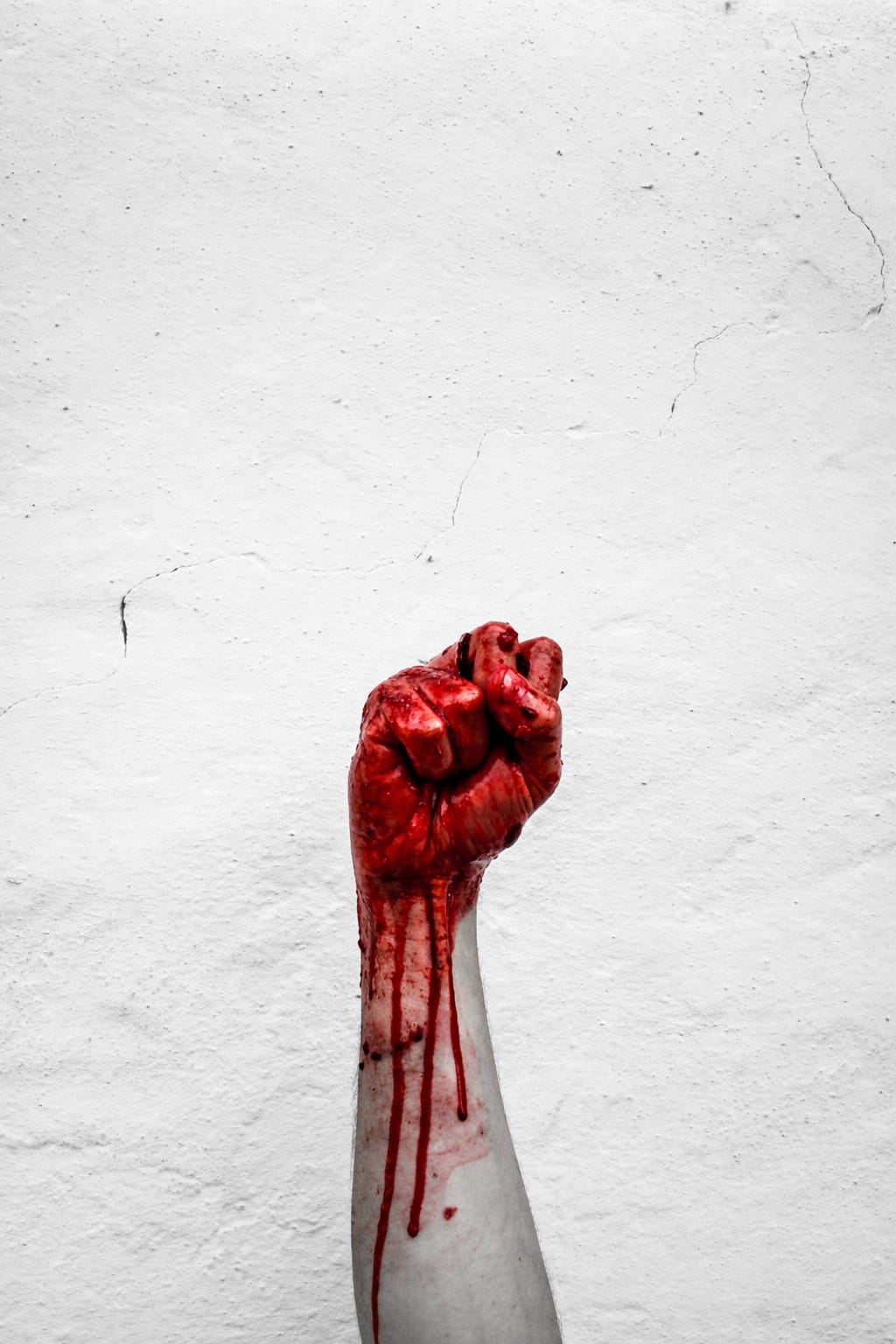
Discussions about street mobilization in Iran tend to slide quickly into emotional and partisan judgments when they remain focused on names and individuals. But if we step back, the core issue is neither the call itself nor even the number of casualties. The real question lies in the mechanism through which political action and collective violence are legitimized, and in how that mechanism operates through power and narrative. Whether a call to the streets is framed as “duty, uprising, and martyrdom” or as “public incitement and a call to killing” depends far less on the nature of the act than on the speaker’s position within the structure of power.
In the years leading up to the 1979 revolution, calls for protest, strikes, and mass presence in the streets were gradually redefined through a language that elevated politics from a social act to a moral and religious obligation. Being present in the streets, resisting the ruling order, and even being killed were no longer understood merely as political actions, but as participation in a sacred cause. Within this narrative framework, the deaths of protesters were not treated as human tragedies or painful costs, but as “martyrdom.” Bloodshed became proof of righteousness, and violence was morally cleansed through a shift in language. The success of the revolution later fixed this narrative in place, rewriting the past in a way that transformed the killing of civilians from an ethical problem into symbolic capital for political legitimacy.
Today, the same dynamic operates in reverse. Calls issued by various opposition figures are now labeled through an entirely opposite vocabulary. Actions that were once described as “uprising” or “resistance” are framed, in official discourse, as public disturbance, incitement to violence, or calls for mass killing. The difference lies not in the act of calling people into the streets, but in the speaker’s relationship to power. Language changes, meaning flips, and interpretation is reversed.
This contrast reveals that the central issue is not human life, nor a principled rejection of violence. The issue is the monopoly over defining legitimacy. Political power determines which deaths are called “martyrdom” and which are labeled “crime.” In both cases, human beings are subordinated to narrative rather than judged by a consistent moral standard.
There is, however, another layer that is often overlooked. Imagine that these calls, instead of ending in repression or failure, had led to the success of a movement and a political transition. In such a scenario, it is unlikely that the same voices now criticizing opposition leaders for irresponsibility and risk-taking would maintain their stance. The narrative would likely shift. Criticism would give way to hero-making, and those same calls would be reinterpreted as signs of courage, leadership, and foresight.
This shift is not exceptional; it is a recurring pattern in political history. Success cleanses methods, while failure criminalizes them. What is described today as recklessness or provocation, if it succeeds, is tomorrow recast as historical wisdom and moral bravery. This is why moral judgments about political calls to action are often shaped not by fixed principles, but by outcomes.
Stating this does not amount to defending calls for street action or legitimizing violence. As I have stated before, I oppose all forms of violence and all undignified methods of political struggle. The purpose of this argument is neither to encourage street mobilization nor to sanitize political risk-taking. It is to expose a mechanism that frequently goes unnoticed: the way political outcomes retroactively rewrite moral judgment.
Ultimately, this is not about defending or attacking any particular call. The deeper issue is how political power uses language to sanctify violence or criminalize it; how it assigns meaning to death or strips it of meaning; and how it reduces people from conscious agents to instruments of narrative control. As long as this mechanism remains unseen, public debate will continue to oscillate between “sacred uprising” and “criminal incitement,” without ever reaching a serious critique of power and legitimacy.