
The Theater of Hostility
When War with Iran Is Just the Set Design for a Profitable Deal

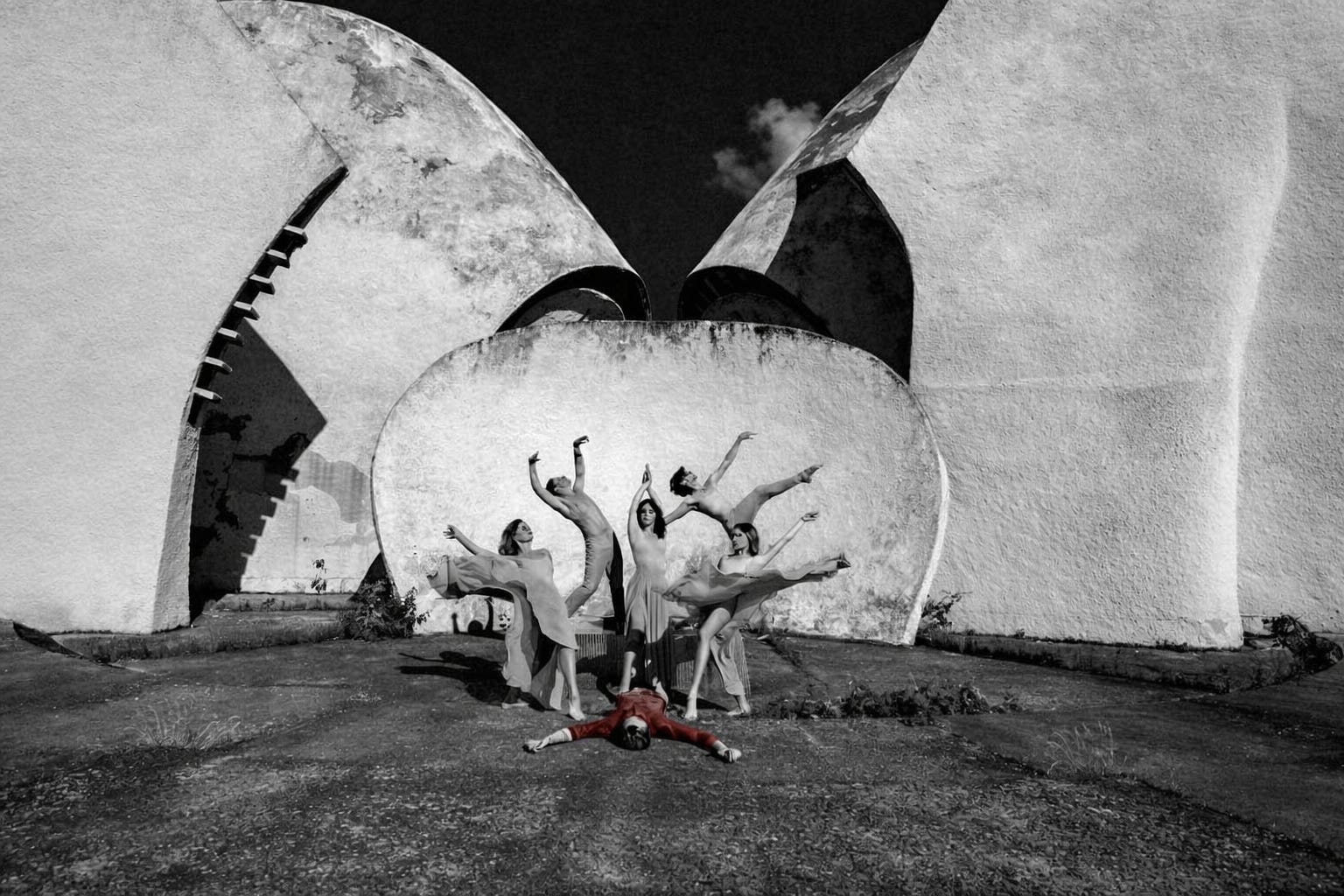
On January 14, in an essey titled Lost Moments published on Wisdorise, I described as one possible scenario that the theatrical confrontation between the United States and the Islamic Republic could be a cover for a behind-the-scenes deal. At the time, this hypothesis felt more like a marginal possibility. Today, however, when I put together the behavior of the main actors and a basic cost–benefit logic, that same scenario has moved from a theoretical option to the most plausible narrative.
Today, however, when one puts together the behavior of the main actors, the pattern of pressures, and a basic cost–benefit logic, this scenario has moved for me from a theoretical possibility to the most plausible narrative.
What is now publicly framed as a “Trump versus the Islamic Republic” standoff, once stripped of its performative layer, looks far more like a high-cost but managed bargaining process than a prelude to war or a genuine regime-change effort. The dominant assumption is that the United States is on the verge of attacking Iran or seeking its immediate collapse. But the actual behavior of Washington and Tehran resembles a negotiation more than a gamble.
First, a direct attack on Iran would be extraordinarily costly in financial, human, and geopolitical terms. Iran is not Iraq in 2003 and not Libya in 2011. Any serious military scenario would mean destabilizing the entire Middle East, disrupting global energy markets, and dragging the United States into a long-term crisis-management cycle. This does not align with Trump’s strategic logic, which is built around minimizing direct costs and maximizing symbolic returns. Trump does not want a war; he wants a “deal brand”: a sellable victory at limited cost.
Second, Iran’s asymmetric response capabilities mean that no strike would be “one hit and done.” U.S. bases in Iraq, Syria, and the Gulf, shipping lanes, and regional energy infrastructure would all be exposed to retaliation. Even if Iran is militarily weaker in conventional terms, it has the ability to expand the scope of the crisis. That alone is enough to strip Washington of narrative control and of any clear exit point. For the U.S., the real danger is precisely this: a war that can be ordered to start but cannot be ordered to end.
Third, the ideological and at times apocalyptic structure of the Islamic Republic is not merely a sign of irrationality; it is a high-risk bargaining tool. A side that signals that the cost of collapse or death is lower for it than usual makes the other side more cautious. This is the logic of strategic madman theory: creating doubt about whether classical deterrence will fully work. The result is that the war option exists on paper but in practice becomes leverage for negotiation.
Fourth—and this is the key point—for Trump, Pahlavi is not a winning card but a risk. Contrary to the common belief that the U.S. would prefer any alternative, from a realpolitik perspective a bad but predictable regime is often less costly than an unknown future. If Trump cares about control, he will not bet on an ambiguous variable. His distrust of Pahlavi can be understood at a deeper level.
For Trump, Pahlavi is not just a person; he represents a potential new order. A new order means new actors, new coalitions, new demands, and a full renegotiation of relations with the U.S. If a future Iran were genuinely nationalist and grounded in electoral legitimacy, it would no longer behave like a rentier, isolated state with a few narrow pressure channels. It could enter reciprocal bargaining instead of one-sided deals. It could diversify partners in energy markets, regional policy, and economic contracts instead of offering rapid concessions. It could rebuild relations with Europe and reduce Washington’s weight in strategic decisions. It could even adopt a multi-vector policy in the U.S.–China rivalry instead of becoming a pressure tool. For Trump, such an independent Iran is precisely what reduces controllability.
Moreover, if Pahlavi wants to build an internal base inside Iran, he will have to distance himself from the image of dependency. That means that even if he needs foreign support in the short term, in the medium term he will be incentivized to signal independence and raise the political cost of “giving concessions to America.” Trump prefers a pawn whose output is measurable and guaranteed. Pahlavi does not offer that guarantee.
Fifth, what we are witnessing in the media and public-opinion sphere is more a cognitive war aligned with pressure logic than a single centralized conspiracy. Outlets such as Iran International and BBC Persian play a role in magnifying imminent collapse narratives, emotional mobilization, “last moment” framing, and a heightened sense of urgency. Structurally, this environment fits Trump’s bargaining logic: raising psychological costs for the other side without committing to an actual strike. In this same framework, the role of Reza Pahlavi becomes more intelligible: not necessarily as an independent architect, but as a piece—wittingly or unwittingly—integrated into this pressure game. His prominence in certain media and the simplification of regime-change narratives serve a psychological function: constructing a “ready alternative on the table” to intensify pressure, not necessarily to execute a real transfer of power.
Sixth, maximum sanctions, recent limited confrontations, internal insecurity, and economic and currency pressure have created a complete leverage package. On one side, a real weakening of the Islamic Republic’s maneuvering capacity; on the other, keeping the negotiation door open. At the same time, parts of Iran’s nuclear capability have been slowed or neutralized without the U.S. entering a full-scale war. This is the optimal pressure point: neither uncontrolled collapse nor cost-free compromise. Compounding this vulnerability is the erosion of Iran’s proxy and alliance network, from Syria and Hezbollah to regional militias and symbolic partners like Venezuela. These tools of power projection are no longer as coherent or dependable as they once were, further narrowing Tehran’s options and making a controlled de-escalation through behind-the-scenes bargaining not just likely, but structurally rational.
Seventh, a point that receives far less attention is the geopolitical cost of the Islamic Republic’s collapse for the United States itself. Collapse would mean a power vacuum in a country of ninety million people, the risk of de facto fragmentation, multi-polar civil war, the entry of regional actors, energy instability, and the opening of uncontrolled pathways for Chinese and Russian influence. From Washington’s perspective, “a weak but standing Islamic Republic” is far less costly than “a collapsed and unpredictable Iran.” This fits perfectly with the logic of a behind-the-scenes deal.
Eighth, this game is not only about Iran. A behind-the-scenes deal—or even moving close to one—also sends a signal to China: the United States can keep a major regional actor in a bargaining position using low-cost tools, without occupation and without classical war. This is an indirect display of power within the broader Washington–Beijing rivalry.
Ninth, Trump needs a symbolic foreign-policy achievement that can be sold as a “deal,” not as a war. Even a minimal agreement with Iran is far more marketable domestically than another bloody Middle Eastern conflict. On the other side, the Islamic Republic also needs economic breathing room, even temporarily, to avoid accelerated collapse. This overlap of needs strengthens the logic of a deal.
Tenth, that is why the performance of absolute hostility continues on stage. The Islamic Republic needs the enemy image for internal legitimacy, and Trump needs it for his narrative of toughness against America’s enemies. The global public, with hashtags, headlines, and statements, plays the role of stage décor. Behind the scenes, however, the logic of the game looks more like a geopolitical bazaar than a battlefield.
At this point, three objections usually arise.
The first objection is: if a deal is in play, why all this tension and threat? The answer is simple: a deal without tension has no leverage. Pressure is part of the deal itself, not its negation. The more real the war image appears, the easier it becomes to extract concessions behind the scenes.
The second objection is: this view is conspiratorial. But this analysis is not based on assuming secret coordination; it is based on reading actor behavior through cost–benefit logic. There is no need to assume that Washington and Tehran are “friends.” It is enough to assume that both want to avoid the worst-case scenario.
The third objection is: war might still actually happen and this entire analysis could turn out to be wrong. Yes, the risk of war is real. But the existence of war risk does not contradict the dominance of the deal scenario. On the contrary: the risk of war is precisely the tool that makes a deal possible.
In this framework, the core question is no longer whether the United States will attack Iran. The real question is what will be traded away in this behind-the-scenes bargaining, and what will only be temporarily spared. If the deal scenario is correct, the main danger is exactly this: not an all-out war, not a clear victory, but a dark recalibration that may, for the people of Iran, mean nothing more than the continuation of the same deadlock in a new format.
All of this exists at the level of possibilities and probabilities, not certainties. From my perspective, power appears where possibilities are weighted—where some paths become more likely and others less so. In this sense, politics is not a field of conscious decisions, but a field of probability regulation. What is political is not necessarily the command, but the configuration of the field itself.
The greatest victims of this geopolitical theater are the ordinary people of Iran. Behind every calculated move and every behind-the-scenes deal, there are real lives at stake, real casualties, and a profound grief that weighs heavily on all of us. While the major players may see this as a strategic game, the human cost—measured in lost lives and deep mourning—remains the harshest reality of all.