
Unfinished Transitions in Iran
Religion, Power, and the Possibility of a Prudent Transition After a Historical Experience

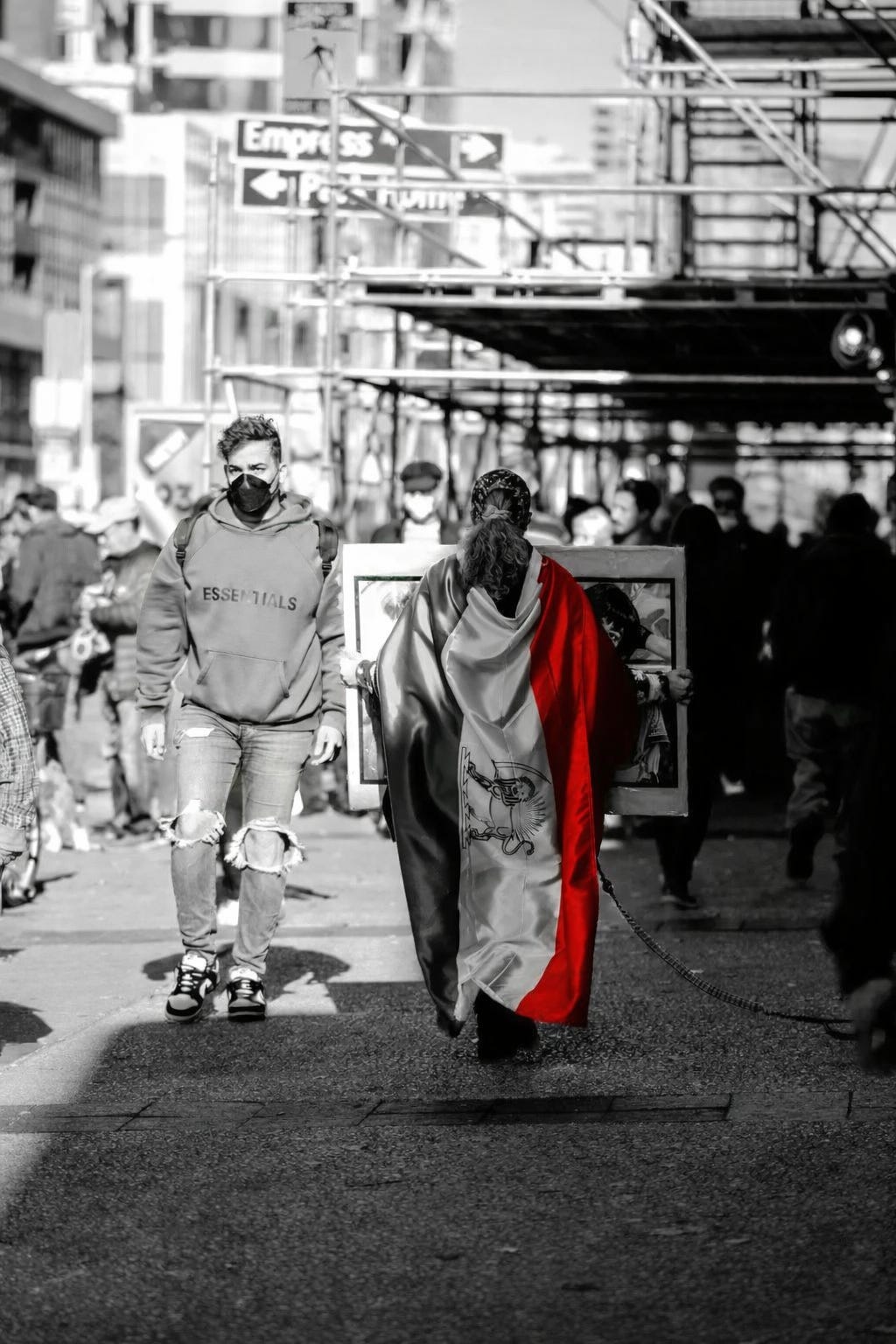
What has repeatedly occurred in Iran’s contemporary history is not merely a transfer of power between regimes, but the reproduction of a persistent pattern in the understanding of politics. The transition from monarchy to the Islamic Republic, and today’s renewed inclination to revisit the previous order, may appear as a shift in position; yet at a deeper level, they represent the continuation of the same logic of power, recreated through new narratives and symbols. The issue is neither individuals nor names; it is the inability to break away from the structure itself.
Reducing this history to simplistic oppositions yields an inadequate analysis. Both orders were heterogeneous combinations of constructive and destructive actions: the development of certain infrastructures and capacities alongside repression, concentration of power, and the elimination of dialogue. Ignoring this complexity leaves the mind prepared to repeat the same mistakes, because a mind incapable of seeing a spectrum inevitably seeks refuge in polarity.
The emergence of the Islamic Republic cannot be reduced to individual errors or merely to external interference. This system was the product of the interaction of historical, social, cultural, and psychological forces. In a society with a long memory of centralized authority, monarchy, and a deep entanglement of religion and power, the transition to an order that derived its legitimacy from institutionalized religion was, at that historical juncture, not accidental but inevitable. This inevitability does not imply moral legitimacy or political effectiveness; rather, it points to the constrained horizon of choices within a given context.
The Islamic Republic can be understood as a costly yet instructive phase. The most important lesson of this experience emerged not at the level of day-to-day politics, but at the level of collective understanding: the distinction between religion as lived experience and religion as an institution of power. This distinction could previously be articulated in theoretical or abstract terms, but only after the lived experience of the Islamic Republic did it become tangible, undeniable, and collectively grasped. The entry of religion into politics neither preserved religion nor reformed politics; instead, it turned both into instruments of domination and structural corruption.
If one can speak of an achievement at the level of collective discernment, this may be the most significant. Not in the sense that society has reached a final maturity, but in the sense that one of the most lethal historical errors has been tested and recognized at great cost. Religion, when transferred from the sphere of individual and ethical experience to the sphere of institution and power, is inevitably emptied of meaning and transformed into ideology. This recognition is irreversible, even if its political consequences have not yet been institutionalized.
The decline of the existing order is also intelligible within this framework. The erosion of legitimacy, the accumulation of inefficiency, and widening social fractures have made its continuation increasingly difficult. Yet the end of an order does not, in itself, mean a rupture from its underlying logic. Without a transformation of mental preconditions and without the internalization of historical lessons, any political transition may simply reproduce the same patterns in a new form.
In this context, speaking of collective prudence requires caution. History does not follow a linear rational or moral path, and there is no guarantee that societies necessarily become “better” through experience. Still, one can speak of the gradual accumulation of certain cognitive distinctions. One sign of this accumulation is a declining inclination toward individual-centered politics and the construction of charismatic leaders. This shift arises not necessarily from maturity, but from the erosion of trust in ideologies and salvation narratives.
A prudent transition becomes possible not through changing faces or replacing narratives, but through a transformation in how power, responsibility, and the relationship between the individual and institutions are understood. If there is to be any talk of the possibility of collective prudence, it depends on a form of development that finds meaning only within its own context—a development in which lived experience, historical memory, institutions, and a society’s temporal horizon enter into continuous dialogue.