

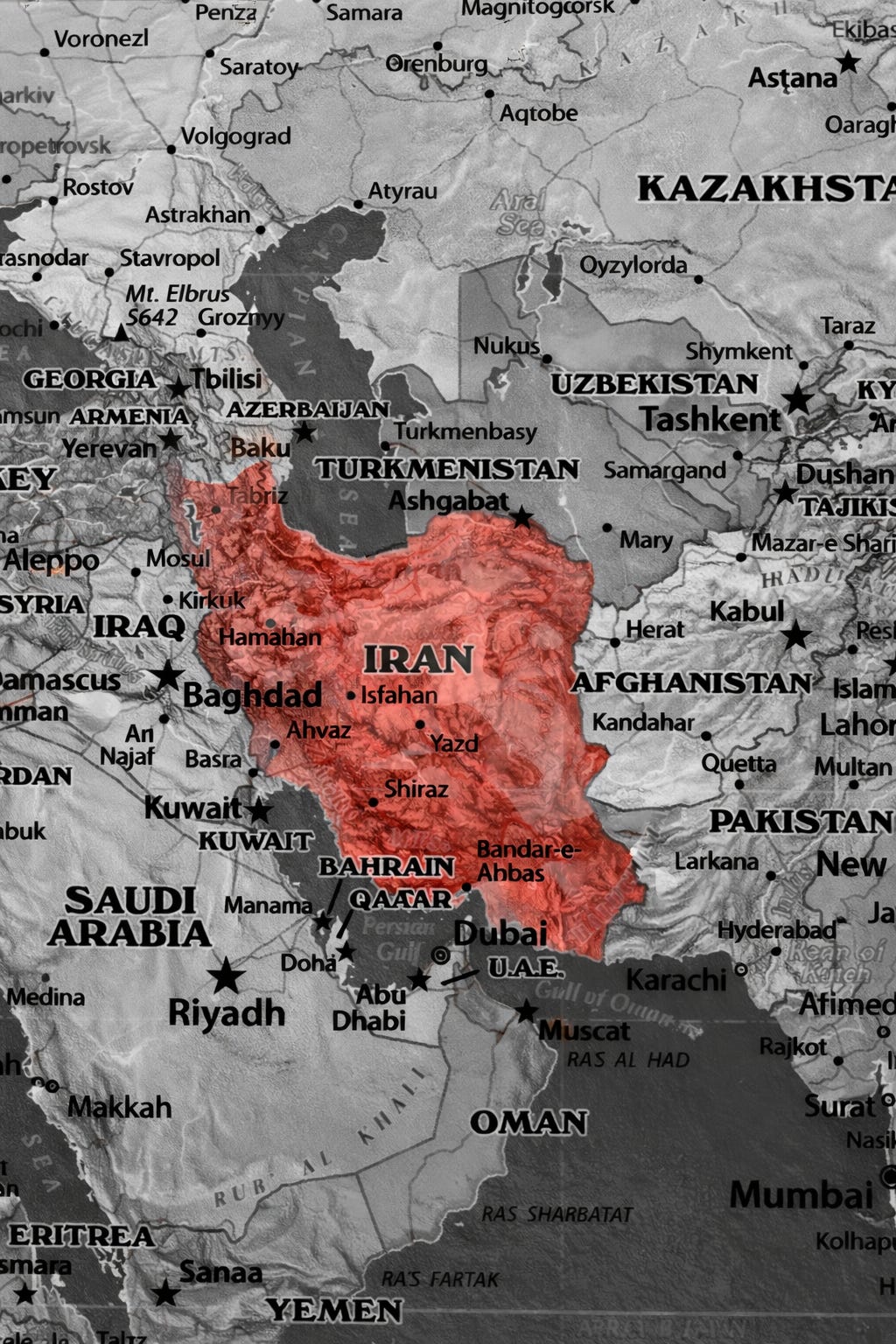
One of the most common analytical errors in confronting Iran’s current situation is to equate it with scenarios such as Iraq, Libya, Afghanistan, or even Venezuela. Such comparisons are usually employed either to frighten society or to justify passivity and the preservation of the status quo. The problem is that these analogies are not only inaccurate but analytically misleading.
Iran is, first and foremost, a continuous historical nation-state. Unlike Iraq and Afghanistan—whose borders are products of twentieth-century colonial divisions—or Libya, which has largely lacked a stable tradition of centralized statehood, Iran has a long record of territorial, administrative, and cultural continuity. This continuity does not imply immunity, but it significantly reduces the likelihood of rapid and total collapse.
Institutionally, Iran’s situation is also distinct. Even under current conditions of erosion and inefficiency, Iran still possesses an extensive network of bureaucracy, education, infrastructure, institutional memory, and experience in governance. Iraq after 2003 was deliberately dismantled from above. Libya and Afghanistan largely lacked such a dense fabric of civil and administrative institutions to begin with. Collapse in those countries was not the outcome of a turbulent transition but the result of an institutional vacuum.
Iranian society is not built on a single source of identity. Ethnic and linguistic diversity in Iran has developed within a shared historical and cultural framework. This limits the reduction of society to purely tribal or sectarian fractures. Comparing this condition with a society like Libya—defined around armed tribes—or Afghanistan, with fragmented local and ethnic structures, is fundamentally flawed.
Levels of urbanization, literacy, and cultural complexity in Iran are also decisive factors. Iran is a highly urbanized, connected, and media-saturated society. These characteristics increase both the capacity for self-organization and the costs of chaos. A society that understands what collapse entails does not easily surrender to it, even when deeply dissatisfied with existing conditions.
That said, Iran’s differences do not amount to absolute security. The primary risk for Iran is not a sudden collapse resembling Afghanistan or Libya, but becoming a playing field for geopolitical competition. Owing to its strategic position, Iran is neither abandoned nor irrelevant. In the event of weak domestic institutions, decision-making vacuums, and political fragmentation, indirect intervention by actors such as the United States, Israel, and regional powers could distort the trajectory of change.
Likewise, while the probability of territorial fragmentation is low, it is not zero. Under conditions of eroded public trust, intensified economic crisis, and a weakened center, even low-probability scenarios must be considered analytically. Ignoring them is neither realism nor optimism; it is dangerous simplification.
The issue, then, is not whether Iran is or is not similar to Iraq, Libya, or Afghanistan. The issue is that relying on such comparisons—whether to instill fear or to deny risk—obstructs a precise understanding of the situation. Iran is neither on the brink of classical collapse nor immune to slippage. The path ahead depends less on simplistic scenarios than on the quality of transition, the capacity for institution-building, and society’s ability to contain collective emotion and external interference.
The real danger is not repeating others’ pasts verbatim, but producing a distinctly Iranian version of crisis—a crisis that, if not properly understood, may emerge precisely from those very differences.