

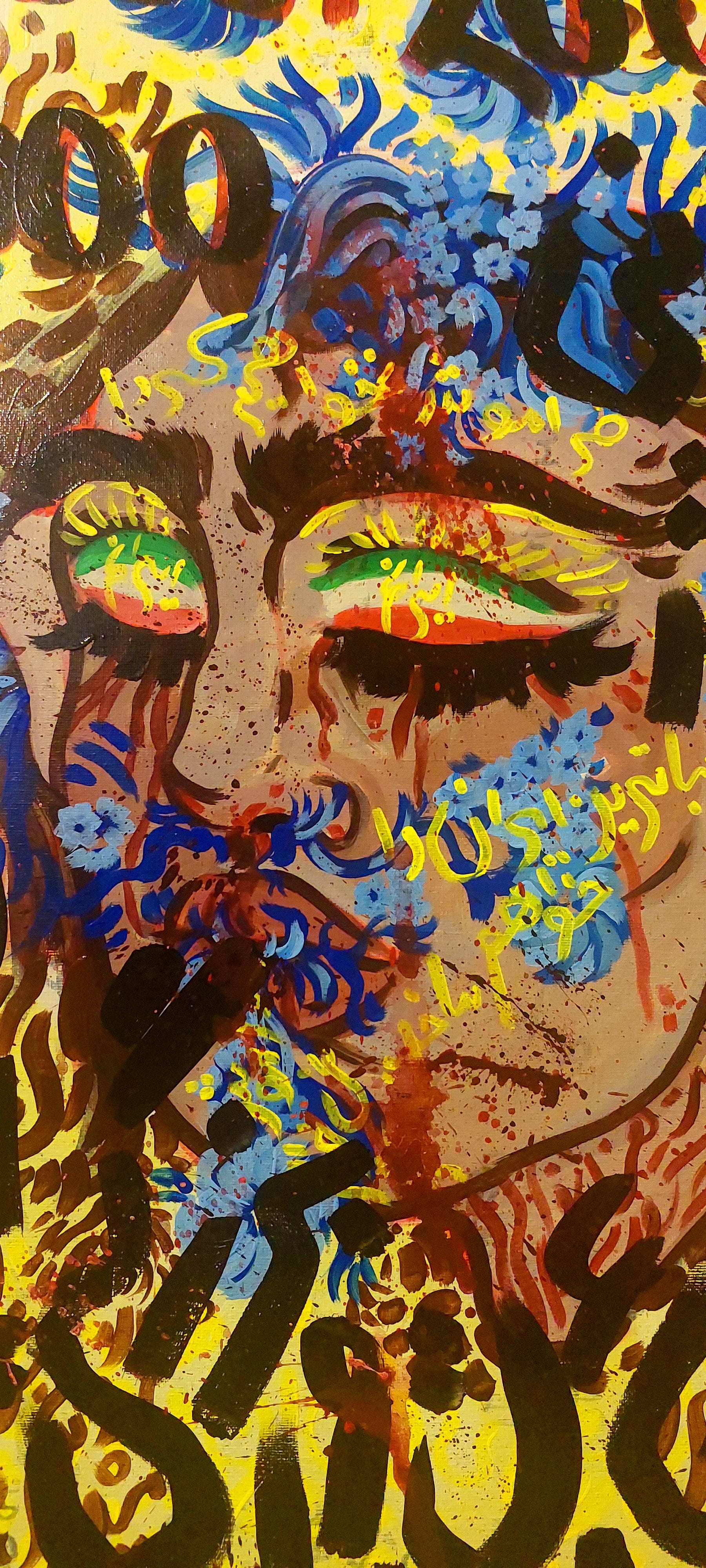
When I moved to Portugal, I encountered a concept I had never truly experienced before: saudade. But before I understood the word, I heard it. In small cafés of Lisbon, in narrow cobblestone streets where yellow light slides across old walls, fado was played. A sound that was neither merely music nor merely narrative. Something in between, and beyond both.
When fado began, something inside me tightened. Not a clear emotion, not sadness, not joy. Something deeper, something that seemed to come from a place older than myself. The melodies would slowly rise, tremble, and then collapse into the singer’s voice. And in that moment, tears would flow involuntarily. Without a clear reason, without a defined story. As if my body understood something my mind had not yet reached.
At the time, I thought this experience belonged to them. To their seas, their long farewells, their history sedimented in sound. I never imagined that one day the same feeling—only harsher, more immediate—would take shape within me. Not in a café, not through music, but among sounds that tear through the body.
What is unfolding in Iran these days is often seen from the outside as contradiction. Dancing on graves, laughing in the midst of grief, celebrating in the streets while the sound of explosions still lingers in the air. But from within, these are not contradictions. They are the only way the body finds not to collapse.
With every missile, it is not only a building that falls. Something inside me collapses as well. Not as a metaphor, but physically, tangibly. As if memory fractures. As if parts of the past—sounds, laughter, moments that will never return—are torn away from within. Each explosion is not just a sound; it is a rupture in time. It splits before and after. You are no longer the same person you were minutes ago.
And when the names come, when you realize those who have died are not “others” but extensions of yourself, death is no longer a piece of news. You no longer say they died. Something inside you goes silent. As if each name creates a point of blackout within the body. A sudden cut. A drop. A void that nothing immediately fills.
At the same time, a counter-movement emerges. Something that, from the outside, may seem harsh or incomprehensible. Within this grief, within this loss, a kind of standing takes shape. Not the kind born of simple hope, nor optimism. Something harder, more severe, fed by the very presence of death. As if you are collapsing and holding yourself together at once. Mourning and moving at once. Losing something and tightening something within yourself at once.
And in the midst of this collapse, something older than all of it rises again. Nowruz. This most ancient rhythm of time in Iranian life had long been pushed to the margins of global awareness, as if buried under layers of history, overlooked by calendars that no longer noticed it. But now, not from peace but from soil and blood, it emerges again.
Amid the rubble, among homes that no longer have walls, within air still carrying the echo of explosions, there are people who pick up brooms, clear the dust, prepare for Nowruz, set the haft-seen table, visit one another. News networks speak of it with astonishment—of people who, under the weight of grief and destruction, still welcome the new year. But what remains unseen is that this is not merely tradition. It is resistance against collapse. It is an insistence on life at the very moment death is closest.
Years ago, we had read a word in literature and passed over it without understanding. We thought it was merely the name of a mourning, a story, a ritual. We had read it, but we had not understood it. Because understanding it requires an experience that cannot be reached from the outside. Now, we do not just understand it—we live it. In the streets, in the sounds, in bodies that, despite exhaustion and grief, continue to move.
This feeling is not simply sorrow. It is where sorrow does not stop, but transforms into movement. Where tears reach dance, and dance becomes standing. Where loss turns into a force that sustains continuation.
To others, these scenes may appear incomprehensible. But for us, this is not contradiction. This is the mechanism that allows us to remain standing.
We had the name for it all along. We had just never lived it: Savushun1.
Savushun derives from “the mourning of Siavash,” an ancient Iranian ritual held for Siavash, a prince unjustly killed. This mourning was not limited to stillness or silent grief; it was embodied. It unfolded through movement, through voice, through the body itself. Grief did not remain static, but entered circulation through collective and ritual expression.
Many scholars who have studied the cultures of Central Asia believe that the Siavashan rituals were closely tied to the New Year. Some even suggest that they played a unique role in the emergence of New Year celebrations. It is well established that rituals dedicated to vegetation deities often contributed to, or directly gave rise to, fixed festivals marking the beginning of the solar year, since spring represents the rebirth of nature. In Iran, however, Nowruz has, since the earliest traceable periods—based on calendrical and astronomical records, archaeological findings, and the structural alignments of sites such as Persepolis and Qal’eh-ye Qavī Qerīlgān—been observed with remarkable precision on the first day of spring. Rituals for vegetation deities were generally aligned with the beginning of the new year, functioning as invocations that encouraged the generative forces of nature. In addition, the Farvardegan ceremonies—annual rites dedicated to the dead—were traditionally held just before Nowruz.