

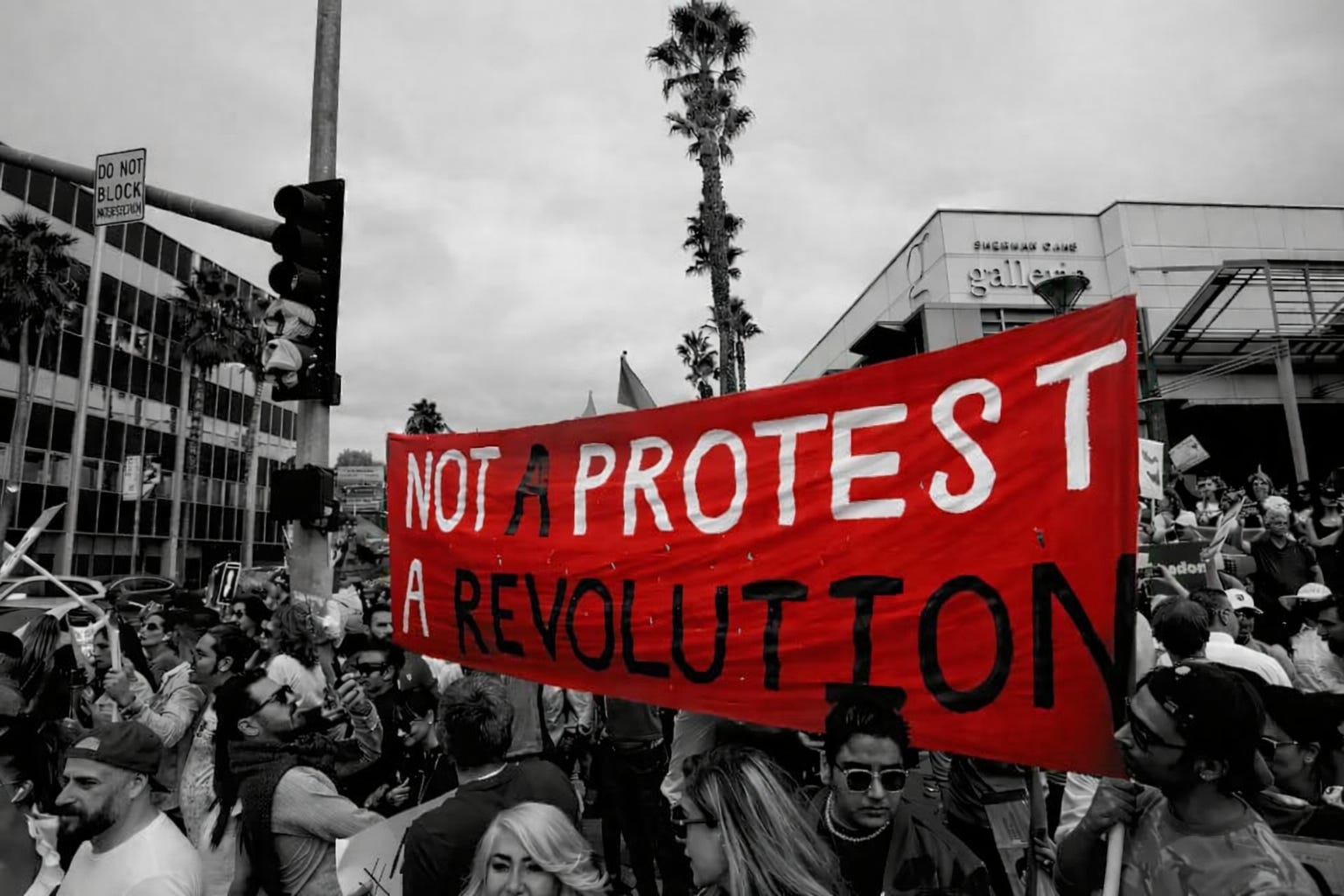
To assess the risk of reproducing past patterns, comparing today’s situation with the 1979 revolution is necessary; however, this comparison must be structural, multidimensional, and free from emotional charge.
First, the social composition has changed. Before the revolution, a large portion of the educated, development-oriented population was present inside the country and emigrated afterward, while power shifted to groups with clerical training and an ideological mindset. Today, a significant part of that human capital has already emigrated in advance, and the question of return, at least at a theoretical level, is being discussed. This difference can become an opportunity for institutional reconstruction, or—if mismanaged—can deepen the divide between those inside and outside the country.
Second, society’s relationship with the world has changed direction. The 1979 revolution pushed Iran toward isolation, psychological warfare, and eventually military conflict. Today, the dominant social demand is oriented toward an open economy, de-escalation, and reintegration into global networks of exchange. At the same time, this very desire to exit isolation can turn Iran into a playing field for geopolitical competition among powers such as the United States, Israel, and regional actors—a risk that is real if domestic institutions remain weak.
Third, the position of religion has shifted. The institutionalized and political religion of 1979 has largely given way to religion as personal experience and individual choice. This transformation reduces the likelihood of forming a religious government, but simultaneously may provoke radical reactions from small extremist Islamist minorities—groups that, while lacking broad social support, retain the capacity for localized disruption.
Fourth, the structure of leadership has changed. The 1979 revolution was organized around a single charismatic leader. Today, the absence of such a figure may signal a move beyond personalism, but it also carries the risks of fragmentation, unproductive competition, and decision-making vacuums.
Fifth, collective historical memory has become more complex. Experiencing both centralized monarchy and religious governance has made society more skeptical toward salvationist narratives. This skepticism can act as a shield against deception, but if it turns into absolute distrust, it can weaken the capacity for collective action.
Sixth, the role of media and the space for dialogue have been fundamentally transformed. Social networks, podcasts, and debates enable the free circulation of ideas and critique. At the same time, this space is highly prone to polarization, emotional escalation, oversimplification of complexity, and the production of imaginary enemies—mechanisms that can legitimize high-cost decisions.
Seventh, society’s relationship with violence has changed. A large segment of society today understands the costs of violence, war, and extremism and shows less inclination toward them. Nevertheless, in conditions of systemic collapse, even low-probability events—such as terrorist actions by extremist groups—can produce disproportionate psychological and political effects.
Eighth, the issue of territorial integrity has become more sensitive at the discursive level. Although the probability of fragmentation is low, under conditions of power vacuum, foreign intervention, or intensified ethnic distrust, this risk exists in theory, and ignoring it constitutes an analytical error.
Ninth, the economy plays a more decisive role than it did in 1979. A society subjected to decades of economic pressure is prone to rushed decisions in search of immediate relief. This condition can serve both as a driver of change and as fertile ground for accepting simplistic, externally dependent solutions.
Tenth, the level of collective awareness regarding the risks of revolution has increased. Unlike 1979, today the very concept of “revolution” is itself under question. This creates the possibility of course correction, but offers no guarantee of avoiding error, since collective awareness without effective institutions can devolve into exhaustion and perpetual suspension.
Overall, the current situation is neither a repetition of 1979 nor immune to slippage. The likelihood of chaos, foreign intervention, fragmentation, or organized violence is low, but not zero. The key difference today is that society recognizes these risks to some extent. The central question is no longer whether danger exists, but whether collective, institutional, and dialogue-based mechanisms emerge to contain it.