
From Reza to Pahlavism
An analysis of the risks of producing a new ideology in the name of freedom

How I see Reza Pahlavi
My understanding of Reza Pahlavi is neither based on his family background, nor shaped by the historical record of his grandfather and father, nor derived from narratives close to the family. Just as any individual can have a deep distance from their parents, Reza Pahlavi cannot be understood as a linear continuation of the Pahlavi family history.
My analysis is grounded not in the rhetoric of news networks or propaganda, but in his published books, the Emergency Notebook of the NUFDI Foundation, and the many long-form conversations, debates, and podcasts in which he has participated over roughly the past decade. These are spaces that allow a more coherent articulation of thought than short statements ever can. Within this context, one encounters a figure who, at least at the level of discourse and theoretical framing, recognizes ideological, ethnic, and racial plurality, is open to criticism, distances himself from aristocracy, and understands democracy not as a slogan but as an institutional process.
Alongside these characteristics, what matters is the existence of a structured plan for transition. Not an ideological program, not a blueprint for seizing power, but a minimal framework built on several principles: returning decision-making to the people, assigning a central role to civil institutions, avoiding the concentration of power, and making a referendum the final arbiter. This program is less a definitive answer than an attempt to open the space of choice and suspend claims to final certainty.
The image I see of Reza Pahlavi is neither that of a savior nor of an heir to power, but of a political actor proposing a minimal, dialogue-oriented framework for a transitional period.
At the same time, this distinction does not imply personal immunity from critique. Serious and well-founded criticisms have been raised regarding Reza Pahlavi’s language, actions, programs, and statements, and responding to them is his own responsibility. This is entirely normal and an essential condition of any political actor’s presence in the public sphere.
Pahlavism as a mental pattern
When I speak of “Pahlavism,” I am not referring to a specific historical period, nor merely to the name of a family. Pahlavism, in this sense, is a personality-centered, monarchist ideology: a mental pattern that views political power not as the product of a social contract, but as a hereditary legacy.
Within this framework, the prince is imagined as the natural heir to power, whether that power is represented in an absolute form or wrapped in constitutional language. The sacralization of the individual, the reproduction of aristocracy, the restriction of critique, and aggressive encountering with opponents are core elements of this mindset. What is visible today among segments of monarchists is less a reasoned defense of a political model than a reproduction of this very logic: the elimination of dialogue in favor of loyalty, and the replacement of argument with insult and verbal intimidation.
Pahlavism is better understood not as a contemporary reaction, but as a deeply rooted mental pattern. A pattern in which the desire for authority, the need for a savior, and the tendency toward obedience overlap. In Invisible Borders, I have addressed in detail the evolutionary and neuroscientific roots of these tendencies, where obedience is presented not as a deviation, but as part of human biological and social history.
Under conditions of crisis, uncertainty, and the collapse of dominant narratives, these tendencies easily move from the psychological level to the political one. Alongside these mechanisms, collective memory and idealized narratives of the past also play a decisive role. The combination of historical fatigue from instability, the failure of ideologies, and the need for certainty can render any society susceptible to reproducing personality-centered patterns.
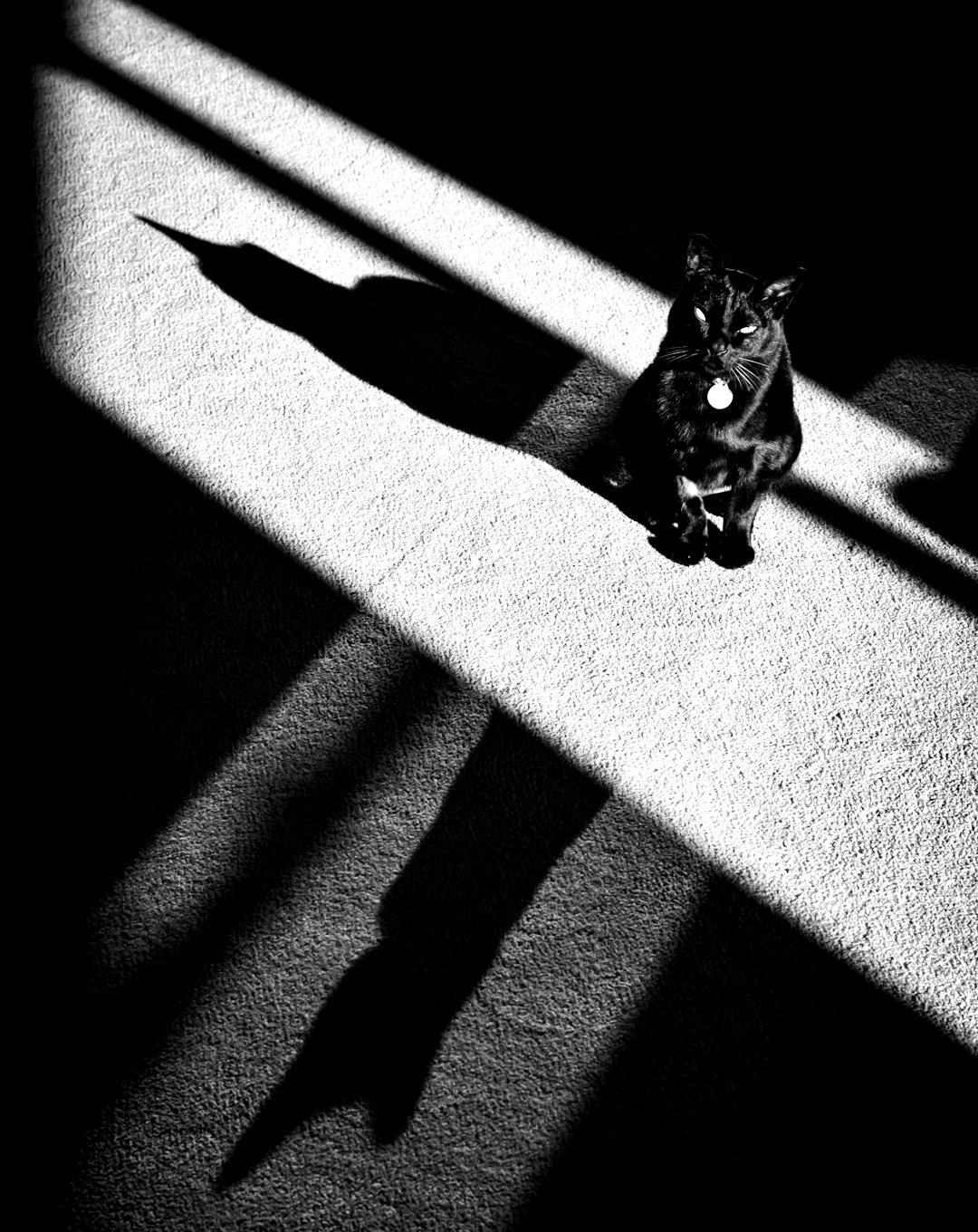
In this sense, Pahlavism is not necessarily the product of Reza Pahlavi’s own actions; it is a phenomenon that can emerge even in opposition to his stated positions. This is precisely the point: at times, what is constructed in the name of an individual becomes an exaggerated shadow bearing little resemblance to the person himself, reflecting less his thought than society’s psychological response to uncertainty.
Ultimately, the central question is not whether there is a risk of sliding into Pahlavism or not. Such a question would require predicting the future based on countless variables, which is practically impossible. The more precise question is this: how can the reproduction of authority-centered patterns be prevented?