

Yesterday, during conversations about Iran’s recent movements, a friend said something that made me pause:
“Don’t think about things you can’t control.”
At first glance, the sentence is calming. An invitation to let go, to step back from anxiety, to reduce psychological pressure. But the problem starts exactly here: with a mistaken understanding of “control.”
Control does not necessarily mean having real power to influence phenomena. More often, it refers to a sense of influence. If we take this distinction seriously, the picture changes entirely. In this framework, no one truly has full control over anything. Phenomena are the result of interactions among multiple forces acting from different directions: historical, social, psychological, and sometimes entirely random.
Put simply, any action you take can be influential, even if its effect is neither immediate nor predictable. Just as any other action, inevitably, affects you as well. We live within a network of influences, not within a domain of control.
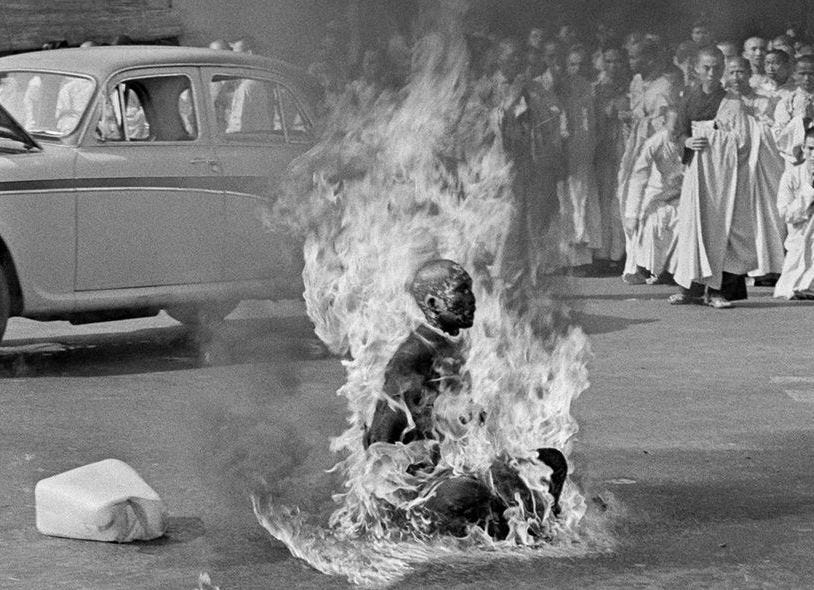
From this perspective, a question arises: how did individuals who had no executive power, no control mechanisms, and who did not even live at the center of events manage to leave deep and lasting effects on a society? The answer lies neither in “control” nor in “will,” but in the interaction of forces that make influence possible.
If a sentence you say today slightly shifts my thinking, or that of a few others, have you not been influential? Even if none of this was under your control?
Phrases like “don’t think about what you can’t control” or “let go of what you can’t change” can undoubtedly be effective strategies for reducing anxiety. They lower uncertainty and pull the mind out of ambiguity. This is precisely what many popular versions of self-development do today: simplifying human experience to generate a better feeling.
But the problem is that these simplifications often come at the cost of ignoring the complex reality of suffering. To reduce pain, we construct mechanisms that ultimately reproduce the same pain.
Humans, especially when faced with uncertainty and helplessness, tend to accept narratives that restore a sense of control, even if that control is purely mental. The issue is not that this tendency is bad or useless, but that we ignore the price we pay for it: the removal of complexity, the denial of interactions, and the reduction of human experience to a few calming instructions.
Every action has an effect, even if that effect is neither immediate nor measurable. We are almost never able to predict the consequences of our actions precisely in advance. The only thing available to us is a retrospective view: understanding later which action, in what context, produced what effect.
Within this horizon, the value of action lies not in certainty of outcome, but in its presence within the network of influences. No action is inherently meaningless. What creates meaning is not guaranteed results, but the placement of actions within a context that becomes intelligible only later — and only later.